
May is packed full of news and webinars. Be sure to scroll all the way to the bottom to not miss any of this exciting information.

IRS managers continue to lead through one of the most active periods of federal workforce change in recent years. Since January 2026, managers have had to monitor proposed budget reductions, workforce reshaping proposals, evolving OPM rules, and changing expectations around performance, accountability, and staffing.
The FY 2027 IRS Budget in Brief requests $9.8 billion from Congress, a $1.4 billion decrease, or 12.2 percent below the FY 2026 enacted level of $11.2 billion. The request also notes that total IRS resources would be $15.9 billion, a 2.5 percent decrease from FY 2026.
For PMA members and all IRS managers, the message is clear: strong frontline leadership will be essential. Managers are being asked to maintain service, support employees, implement evolving policy, and preserve institutional knowledge during a period of continued uncertainty.
PMA will continue to monitor these changes and advocate for managers to be included early in decision-making, supported with clear guidance, and recognized for the critical role they play in carrying out the IRS mission.
Federal News Network reported in May 2026 that many IRS employees temporarily reassigned to taxpayer services may remain on extended details due to a large amended return backlog.
Manager takeaway:
Extended details can create pressure in both the gaining and losing organizations. Managers should document workload impacts, communicate clearly with employees, and elevate operational concerns through appropriate channels.
Federal managers are often asked to implement decisions they did not design, explain policies still evolving, and maintain morale when employees are anxious. During periods of budget pressure and workforce uncertainty, the most effective managers focus on what they can control:
Communicate early and honestly, even when the answer is “we do not know yet.” Avoid filling gaps with speculation. Keep employees focused on mission-critical work. Document workload concerns. Recognize signs of burnout. And most importantly, make sure employees understand that change does not eliminate the need for professionalism, dignity, and respect.
Managers are the stabilizing force in the IRS. Your leadership helps employees stay grounded while the agency navigates uncertainty.
May Webinars You Can't Miss
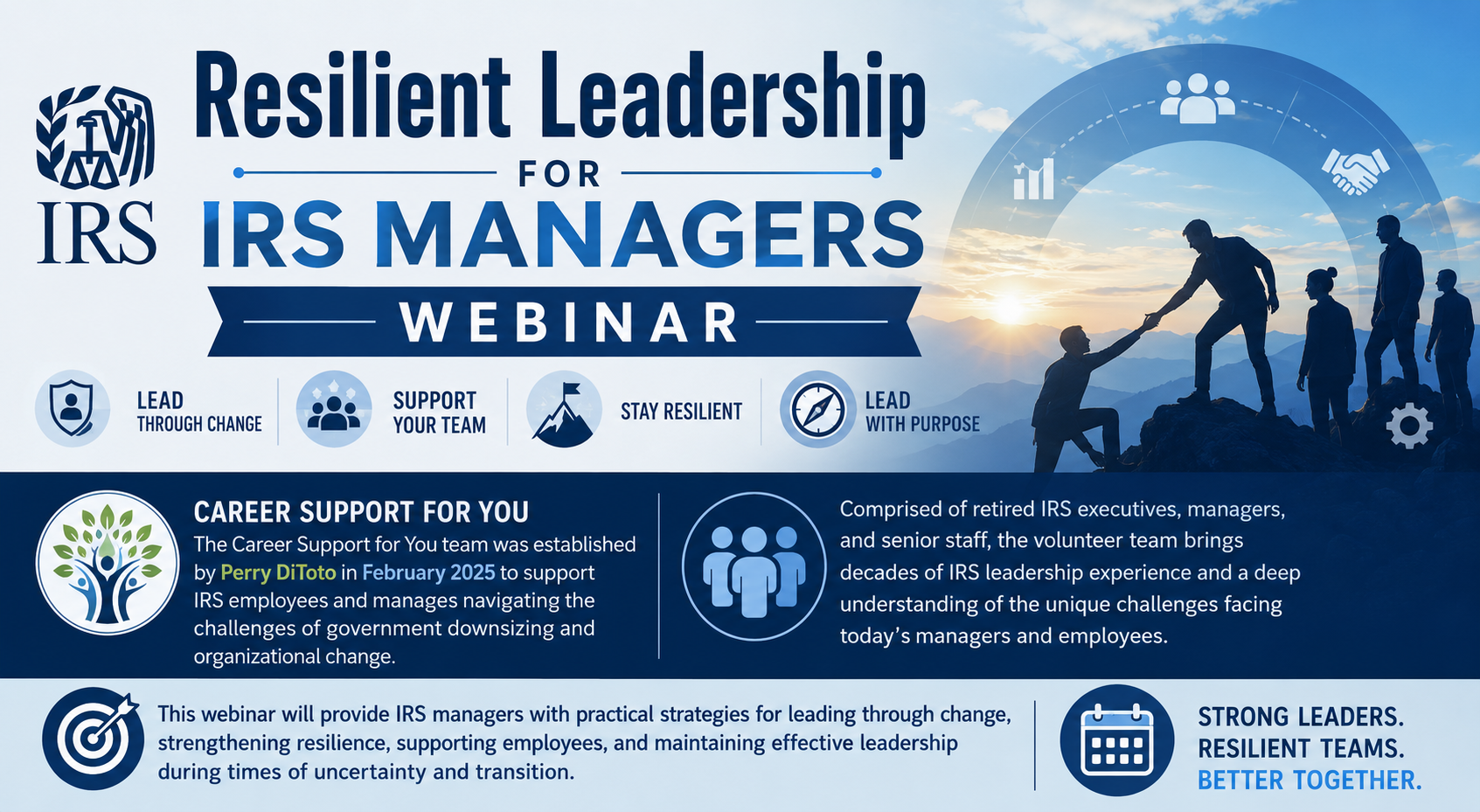
Resilient Leadership Webinar May 20, 2026 /1pm - 2pm CSTPresented by Former IRS Executive Leaders:Perry DiToto, Carolyn Lee, Chris Wagner,Michelle Treshler and Steve Fite
FEDS Protection WebinarBack by Popular Demand.PLI for Managers - The 3 areas of professional exposure.DO NOT MISS THIS EVENTMay 27, 2026 / 12-12:45pm CST


PMA continues engaging constructively with IRS leadership as the agency moves forward with implementation of the 2026–2030 Treasury Strategic Plan. PMA recognizes the significant work ahead and appreciates the agency’s focus on workforce planning, enterprise alignment, stronger project and process management, modernization, and mission delivery.
As implementation moves forward, PMA is focused on helping leaders be successful while ensuring workforce decisions are thoughtful, transparent, and grounded in operational reality.
PMA has engaged the agency on several key areas impacting managers and employees, including workforce optimization, staffing sufficiency, performance alignment, employee development, hiring modernization, HR service delivery, workforce analytics, and change management.
PMA’s advocacy has centered on several core principles:
PMA has also emphasized the importance of transparency surrounding staffing methodologies, mission critical occupations, workforce sufficiency metrics, performance management expectations, and enterprise service delivery changes under the Treasury Common Services Center model.
In discussions with leadership, PMA has reinforced that successful implementation of the Strategic Plan will depend heavily on frontline managers who are responsible for communicating change, maintaining morale, supporting employees, and ensuring continuity of operations during periods of transition.
PMA remains committed to being a constructive partner with the agency by helping surface operational concerns early, supporting effective communication, and reinforcing leadership excellence across the IRS.
As the Strategic Plan continues to evolve into implementation, PMA will continue advocating for managers to have:
Strong leadership, informed workforce planning, and thoughtful implementation will be critical to the IRS’s long-term success — and PMA remains committed to supporting managers every step of the way.
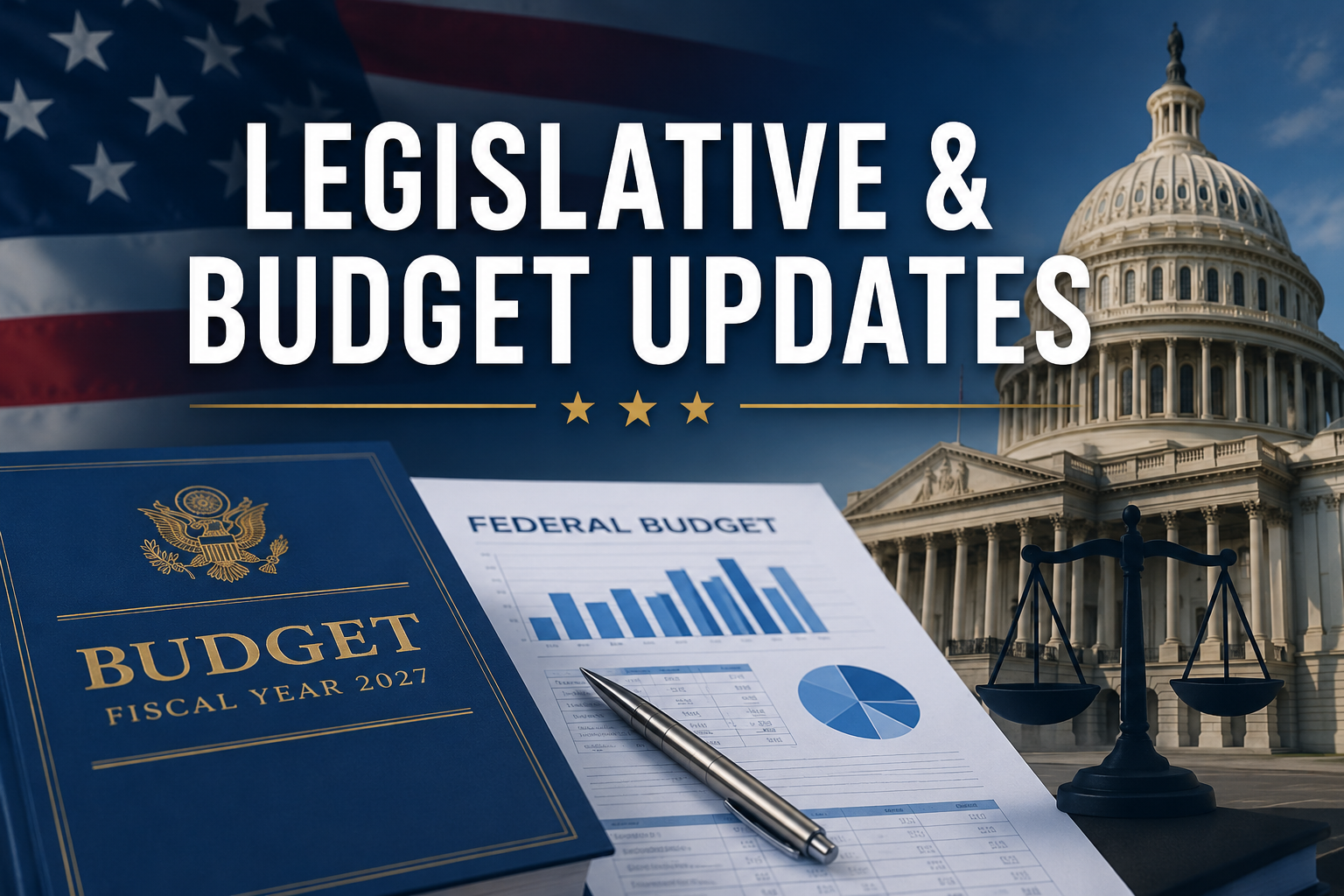
The IRS FY 2027 Budget in Brief requests $9.8 billion, down from the FY 2026 enacted level of $11.2 billion. This proposed reduction would have significant implications for staffing, taxpayer service, enforcement, technology modernization, and operational planning.
What managers should watch:
Managers should prepare for continued questions around workload distribution, staffing gaps, service expectations, and how reduced funding may affect business unit priorities.
A House FY 2027 spending proposal would provide the IRS with approximately $10.2 billion, with public-facing taxpayer services reportedly protected while enforcement would receive deeper reductions.
PMA perspective:
Any funding reduction must be evaluated not only by dollar amount, but by its effect on managers’ ability to lead teams, meet filing season demands, maintain compliance programs, and support employees.
On March 5, 2026, OPM issued a proposed rule revising federal reduction-in-force regulations. OPM stated the proposed rule would make RIF regulations more “streamlined, efficient, and merit-based” by prioritizing performance over tenure and length of service in retention decisions.
What managers should know:
This is a proposed rule, not final policy. Managers should avoid speculation with employees and rely on official IRS and HCO guidance.
OPM issued 2026 implementation guidance for Schedule Policy/Career positions. The guidance states that positions moved into Schedule Policy/Career remain career positions and are not subject to personal or political loyalty tests. It also states that affected employees continue to have protections against prohibited personnel practices, including retaliation for reporting waste, fraud, abuse, or legal violations.
Manager takeaway:
Managers should be aware of the policy, but should not assume a position is affected unless official agency guidance identifies it.
OPM’s April 2026 CHCO memos include updates on federal workforce competency initiatives, modernization and consolidation of occupational series, and competency-based standards for the IT Management 2210 series.
Why it matters:
These changes may influence position classification, hiring, skills assessments, workforce planning, and future training needs.
The President’s FY 2027 Budget requests $11.5 billion in gross discretionary budget authority for Treasury domestic programs, a $1.5 billion, or 12 percent, decrease from the 2026 enacted level.
IRS manager impact:
Treasury-level reductions may affect IRS operating assumptions, modernization timelines, administrative support, and staffing decisions.
White House and OPM workforce policies continue to emphasize accountability, performance management, hiring reform, and workforce reshaping. OPM’s 2026 Schedule Policy/Career guidance states that agencies remain responsible for notifying affected applicants and employees and updating internal policies where applicable.

1. Budget discussions are active and may affect FY 2027 planning.
The IRS request is below the FY 2026 enacted level, and House proposals continue to evolve.
2. OPM is moving forward on workforce policy changes.
Managers should monitor guidance on RIF rules, Schedule Policy/Career, classification, competencies, and performance management.
3. Do not speculate with employees.
Use official IRS, Treasury, OPM, and HCO guidance.
4. Document workload and staffing concerns.
Clear documentation helps leadership understand operational impacts.
5. PMA will continue to advocate for managers.
Managers must be included in implementation planning, workforce decisions, and communication strategies.
PMA recognizes the professionalism and resilience IRS managers bring to the workplace every day. As policies, budgets, and workforce expectations continue to evolve, PMA will remain focused on ensuring that managers have a voice, receive timely information, and are supported in leading the IRS workforce.
Kelly Reyes
Executive Director
Professional Managers Association
kelly@promanager.org
READ YOUR PMA ARCHIVED NEWSLETTERS HERE
NEWSLETTERSInvite a Manager to Join PMA NOW!
Don't Forget
REIMBURSEMENT FOR PLI INSURANCE
Complete this FORM to receive your 50% reimbursement for your Personal Liability Insurance.