As summer unfolds, activity in the House of Representatives and at the IRS remains intense, with legislative proposals, oversight, and operational changes all moving quickly. For IRS managers and management officials, this is a season that requires close attention, steady leadership, and careful preparation as new developments continue to shape the work ahead.
This July newsletter highlights the most important House and IRS developments affecting our members, along with the operational and workforce impacts that may follow. Our goal is to help you stay informed, stay ready, and stay connected to the issues that matter most to IRS leadership and to the taxpayers we serve.
Thank you for your continued professionalism, dedication, and commitment to public service during a very busy summer.
News From Capitol Hill1. New IRS-Focused Legislation (June 30–July 1, 2026)On July 1, 2026, the House Ways and Means Committee marked up and approved seven bills that touch nearly every part of IRS: workforce, analytics, AI, preparer enforcement, taxpayer rights, and exempt organization compliance.
2. What This Means for Your Business Unit A quick reference guide on which legislation will affect your business unit.Read More
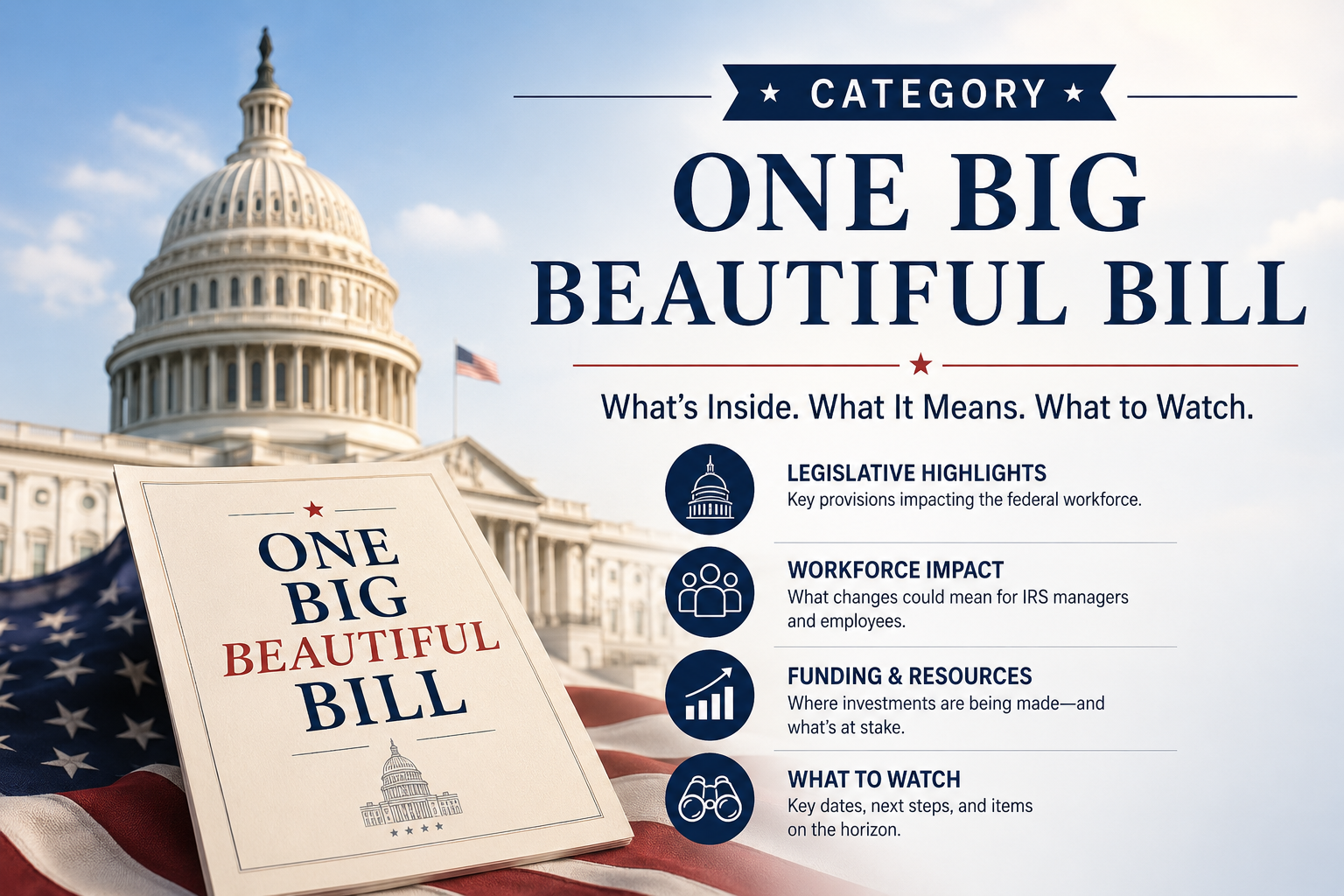
2. One, Big, Beautiful Bill– UpdatesWhile the underlying law was enacted in July 2025, IRS issued new implementing guidance in June 2026 that affects operations, compliance, and taxpayer communications.Read More
OPM Decentralizes Federal Employee Survey
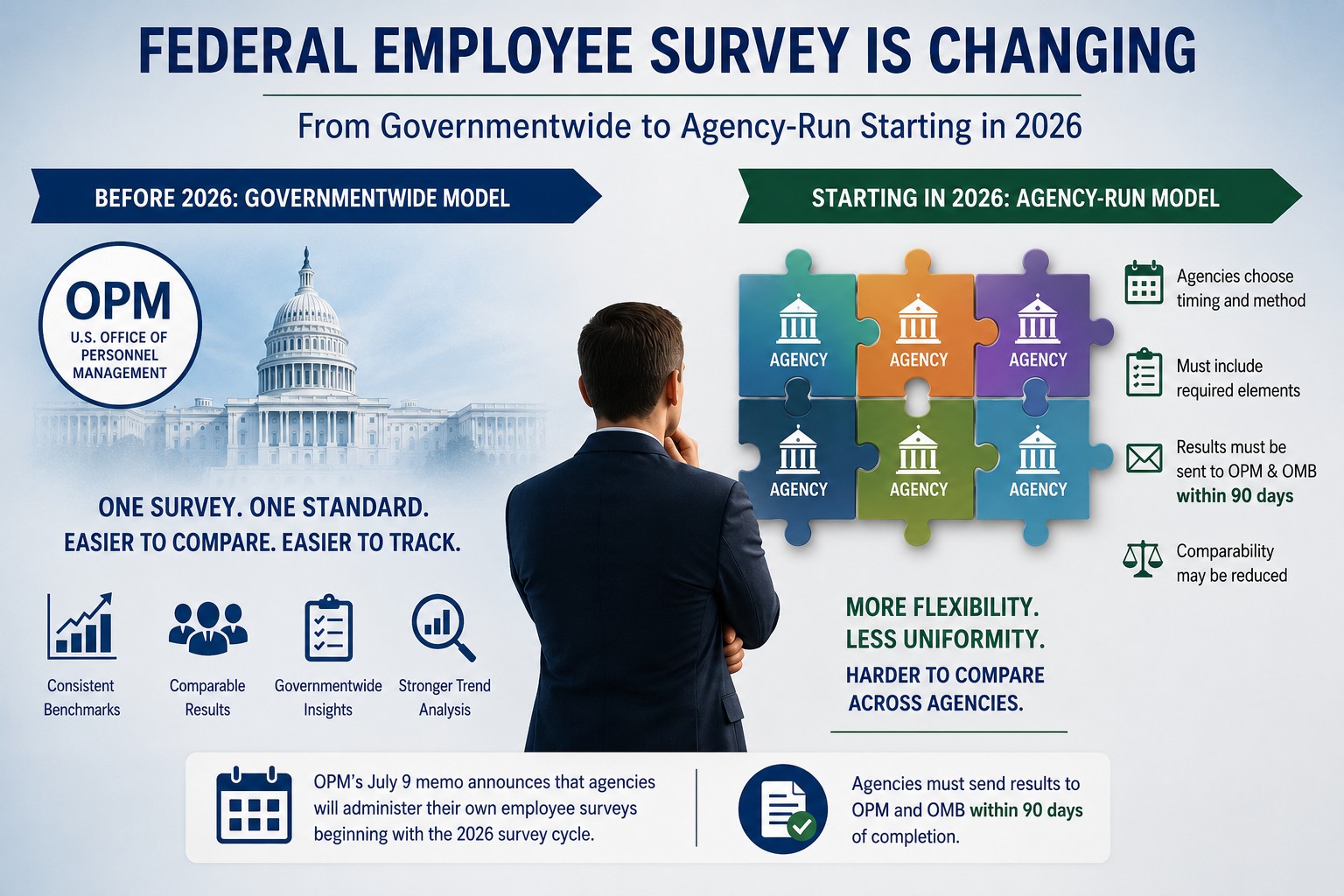
OPM is moving the annual federal employee survey from a governmentwide process to an agency-run model starting with the 2026 survey cycle, which will likely make cross-agency comparisons less uniform even if agencies still have to report results. The workforce-shrinkage numbers you cited also strengthen the case that staffing pressure is a real issue, not just a perception.
OPM’s July 9 memo says agencies, not OPM, will administer their own employee surveys beginning with the 2026 cycle, and each agency will have flexibility on timing and method as long as required elements are included. The memo also says agencies must send results to OPM and OMB within 90 days of completion. A major practical effect is that governmentwide benchmarking becomes harder if agencies use different survey designs, even if the core questions remain partly standardized.
The biggest concern is comparability. If agencies control more of the survey process and disclosure detail, it becomes harder to track morale, workload, and management trends consistently across the federal workforce over time. That makes independent or agency-specific data more valuable for anyone trying to argue that staffing shortages, burnout, training gaps, or pay compression are worsening conditions.
GAO’s 2025 workforce accounting shows a net drop of about 256,000 federal employees, from roughly 2.27 million to 2.01 million across 22 of 24 major agencies. That net decline came from nearly 378,000 separations and about 127,000 hires. In the first half of 2025 alone, GAO also reported 134,122 separations across 23 CFO Act agencies, with a large share being retirements or resignations.
Your PMA action item makes sense: if the governmentwide survey becomes less consistent, a stable manager survey can serve as a better internal benchmark for staffing, burnout, training, pay compression, and confidence in leadership. In advocacy terms, a recurring PMA survey would help preserve a trend line even if OPM’s data becomes less comparable agency to agency. Independent IRS-manager data could be especially useful if it captures the same core measures every year.
READ YOUR PMA ARCHIVED NEWSLETTERS HERE
NEWSLETTERSInvite a Manager to Join PMA NOW!
Don't Forget
REIMBURSEMENT FOR PLI INSURANCE
Complete this FORM to receive your 50% reimbursement for your Personal Liability Insurance.